Acibecheiros / Jet-craftsmen
O acibeche, material
fósil do período xurásico é a artesanía máis característica da cidade
de Santiago. Admirado polo seu negro intenso dende a antigüedade, convertiuse
en emblema xacobeo grazas á influencia de peregrinos que acudían de toda
Europa a visitar o sepulcro do apóstolo Santiago, e que o levarían como
recordo da súa peregrinaxe.
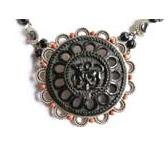
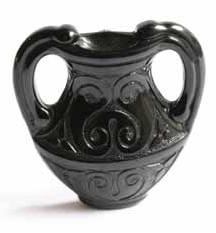
De cor negro intenso, suave, compacto, lixeiro, duro ainda que fráxil á hora de seren traballado convertiuse nun material co que se desenvolveu unha importante artesanía localizada na cidade de Santiago. Pezas de índole relixiosa destinadas aos peregrinos, xoias de carácter popular, amuletos contra o mal de ollo, obxectos decorativos foron tallados en acibeche, unha tradición artesanal que continúa nos nosos días.

Jet, a Jurassic fossil, is the most emblematic piece of the crafts in Compostella. It has been admired by its pitch black colour from a very early age and became the most characteristic and emblematic Pilgrimage symbol. Myriads of pilgrims travelling from different parts of Europe who came to Compostella to visit St. Jame´s tomb, would buy a jet piece as a pilgrimage souvenir.
Jet is a pitch black, soft, compact, light, hard but also fragile material when it is carved. The use of jet gave rise to a very important craft, particularly in Compostella. Religious pieces addressed to pilgrims, popular jewellery, amulets which aimed to protect against bad spells, decorative objects, etc, have been carved in jet. This is an old tradition that comes up to the present.
O acibeche calou fondo en Compostela grazas á peregrinación. Moitas foron as pezas de índole relixiosa labradas en acibeche pola cofradía dos acibecheiros de Santiago de Compostela, entre os que destacan fundamentalmente dous de eles: a Vieira e o Santiago vestido de peregrino.
A Vieira convertiuse no símbolo de peregrinase grazas aos peregrinos que viñan de toda Europa e que a levaban prendida na súa vestimenta como recordo da andadura a Santiago. O Santiago peregrino resulta unha popularización da figura de Santiago apóstolo, que o vestirían coas ropaxes características dos romeiros da época.

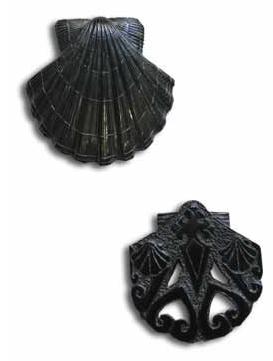
Jet would not be what it is in Compostella without the Pilgrimage. The Society of Jet-craftsmen (A Cofradía dos Acibecheiros) of Compostella, produced numerous religious jet pieces.
Among them, the most remarkable ones are The Scallop and small figures representing St. James dressed as a pilgrim.
The Scallop became the Pilgrimage symbol, since pilgrims themselves who were arriving in Santiago from different European countries, used to stitch it to their garments as a symbol of their pilgrimage. The figure of St. James dressed as a pilgrim is the result of the popularity of the saint himself, who was displayed wearing the pilgrims´ clothes.
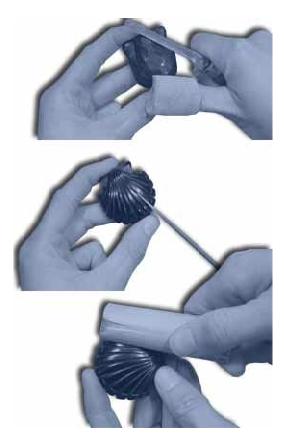
O descenso do número de peregrinos que acudían a Santiago fixo que o acibeche perdera a súa importancia na cidade, polo que se comenzaron a traballar xoias que non terían o carácter relixioso da época anterior ao século XVII, ainda que se seguirían a tallar pezas de temática relixiosa de grande importancia encargadas pola Igrexa ou por diferentes institucións relixiosas.
A venda fíxose ambulante en mercados por todo o noroeste peninsular e se tallaron xoias de unha calidade importante. Así se popularizaron as xoias feitas en acibeche.
The shortage of pilgrims travelling towards Santiago meant that jet would lose popularity in the city. Consequently, artisans started to carve jewels which did not have the religious connotations of those jewels which go back to a time before the 17th century. Nevertheless, the Church and other religious institutions would still keep demanding important carvings in jet.
The sale was made on rounds in markets throughout the nororeste Peninsular and carved jewelry quality important. So are Catching jewelry made jet.
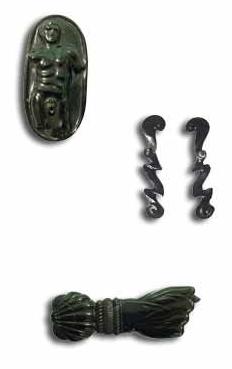
Ao acibeche se lle conferiron moitas propiedades, tanto curativas como máxicas. Comentase a capacidade de curar determinadas enfermedades, tales coma as cataratas e os "lamparones". Tamén se utilizou para artes adivinatorias e como material máxico no que destaca como protector contra o mal de ollo, por medio da Figa.
A figa é un puño pechado no que o dedo pulgar sobresae entre o índice e o medio. Protexe contra o mal de ollo, que é un mal que poseen determinadas persoas que transmiten coa mirada e que produce unha desmelloría nas persoas que o sufren, sendo os vellos e os nenos os máis propensos a "absorber" eses males. Este símbolo, utilizado na península Ibérica e que calou en América grazas á influencia española, foi prohibido pola Igrexa, debido á súa forte carga pagana. Para disimular o símbolo, á figa se lle labraron múltiples motivos, tales como figuras xeométricas ou santos.
Jet was given different kinds of power, either a healing power or a magic one. It was believed that jet could cure people from some diseases such as cataract and scrofula. Jet, in the shape of the "figa", was also given a magic character, specially by protecting people against bad spells.
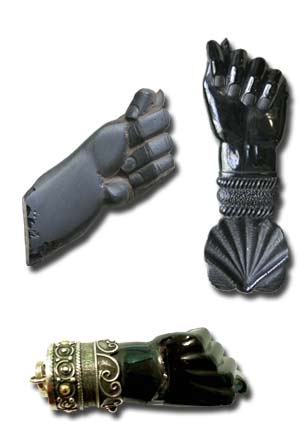
The "figa" is a tight closed fist with the thumb coming out between the forefinger and the middle finger. It is believed to protect against the power some people have to cast bad spells over others by just looking at them. The person who is under a spell suffers noticeably. Children and the elderly are prone to suffer from bad spells. This symbol, which was used in the Iberian peninsula and became popular in America due to Spanish influence, was forbidden by the Church. The Church considered the "figa" a dangerous pagan symbol. In order to disguise it, craftsmen used to print different carvings on it such as geometric designs or even religious images.